The relationship between the American automobile and the silver screen is one of the most enduring love affairs in cultural history. More than just a prop to get actors from point A to point B, the cars featured in classic cinema often became characters in their own right, defining the cool, the dangerous, and the rebellious spirit of their eras.
For the gearhead and the cinephile alike, these machines represent the intersection of engineering and myth-making. Let’s take a look at the icons that burned rubber into our collective memory and changed automotive culture forever.
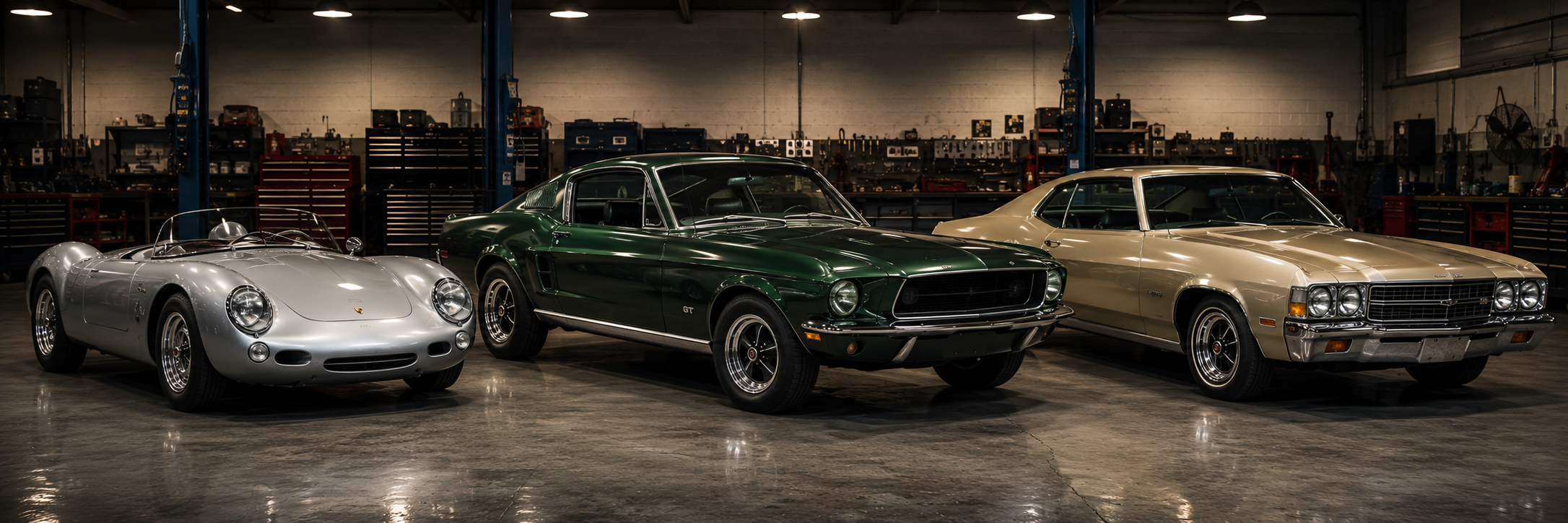
The Rebel’s Choice: The 1955 Porsche 550 Spyder
Perhaps no car is as inextricably linked to a singular performance as the “Little Bastard,” James Dean’s 1955 Porsche 550 Spyder. While not a muscle car in the traditional Detroit sense, its presence in Rebel Without a Cause solidified the automobile as the primary vessel for youth rebellion. It transformed the car from a family appliance into a symbol of existential freedom and high-stakes living. The tragedy surrounding Dean and his car cast a long shadow, turning the machine into a cultural artifact that represented the dangerous allure of the fast life.
The Pursuit of Perfection: The 1968 Ford Mustang GT Fastback
If there is one definitive automotive moment in film history, it is the chase scene through the streets of San Francisco in 1968’s Bullitt. The Highland Green 1968 Ford Mustang GT Fastback, piloted by Steve McQueen, set the bar for every cinematic car chase that followed.
This wasn’t just about speed; it was about the raw, mechanical presence of a V8 engine. The film prioritized the genuine sounds of the engine and the physicality of the driving over music or artificial effects. By showcasing the Mustang as a gritty, capable machine rather than a polished showroom model, Bullitt elevated the muscle car to a symbol of stoic, masculine competence. It turned the GT Fastback into a permanent fixture in the pantheon of American performance.
The Counter-Culture Cruiser: The 1973 Chevrolet Chevelle Laguna
Moving into the 1970s, the automotive aesthetic shifted alongside the culture. The 1973 Chevrolet Chevelle Laguna featured in classic street-racing cinema represented a new era of muscle—one that felt slightly more attainable, rugged, and ready for the blacktop. While these cars were increasingly battling restrictive emissions regulations, they maintained a design language that screamed authority. Their screen presence acted as a final bow for the classic muscle era, capturing a sense of transition as the hobby shifted toward the customization and “street brawler” ethos that many of us still love to work on today.
The Cultural Impact: Why These Cars Still Matter
Why do these specific cars continue to resonate decades later? It comes down to identity.
- Engineering as Expression: In these films, the car is often the only thing the protagonist truly owns or controls; it represents an extension of their personality.
- The Aesthetics of Power: These films taught us what power looked like, setting the standard for what a “cool” car should be through the stance of a wide-body muscle car or the aggressive lines of a sports racer.
- Authenticity: For those of us who spend time in the shop, these movies resonate because they show the cars being used for their intended purpose—pushed to their limits and handled with a driver’s intuition.
The cars of the silver screen did more than just sell tickets; they shaped the way we see our own projects. Whether you are restoring the body or maintaining the chassis, you are participating in a tradition that these films helped create. These machines weren’t just metal and rubber—they were, and remain, the ultimate icons of the road.